

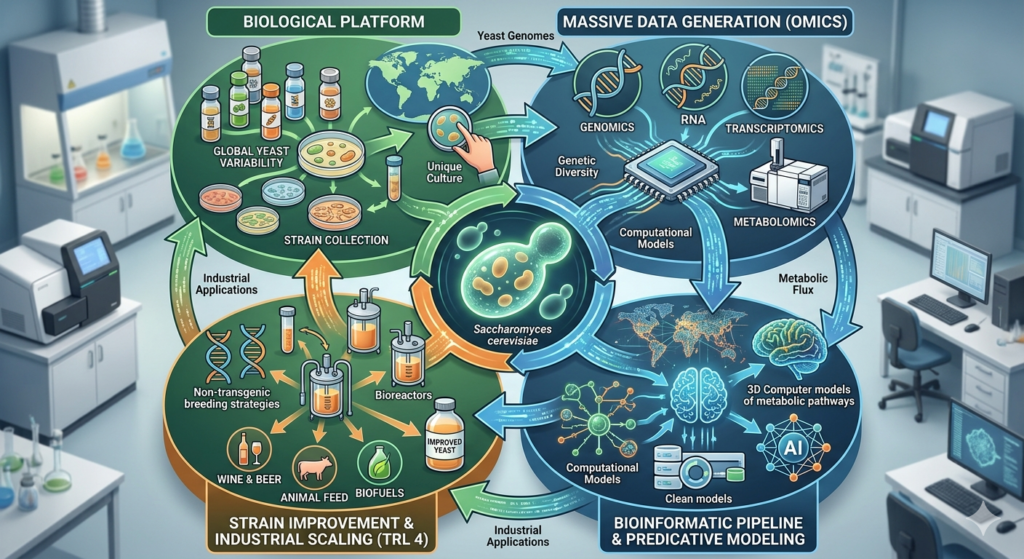

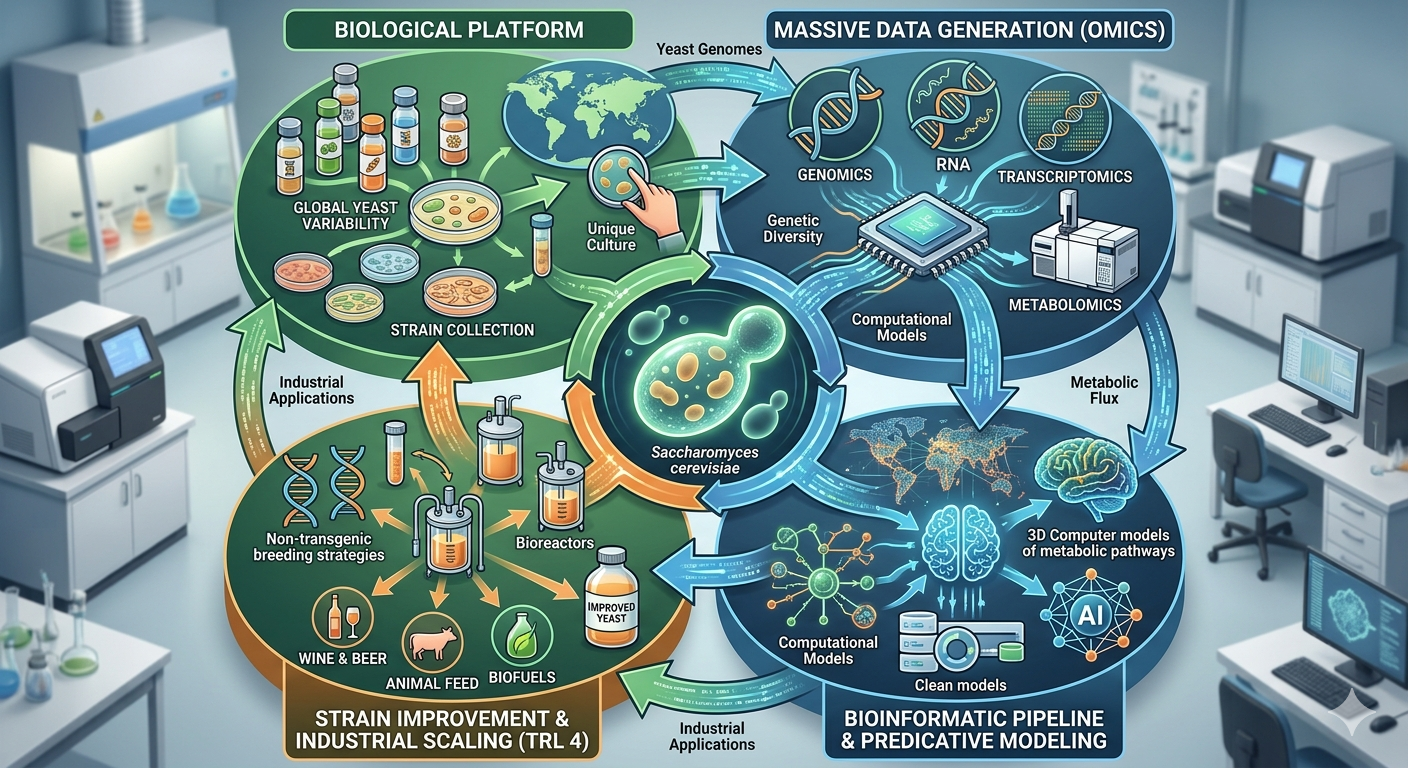
The main objective of our project is to develop a comprehensive basic and applied study platform dedicated to generating new, non-transgenic strains of Saccharomyces cerevisiae. By addressing critical production challenges across various biotechnological industries, we aim to lay the necessary scientific and technological foundations to drive the development, diversification, and long-term sustainability of the yeast industry both locally in Chile and globally.
To achieve these milestones over a three-year period, our project incorporates advanced computational and multi-omic pipelines into its technical workflow. The research team will first establish a high-diversity yeast platform by incorporating global genetic variants from international collections. Using recent advances in omics sciences, we will simultaneously collect exhaustive genomic, transcriptomic, and metabolomic data. Our multidisciplinary team, including bioinformaticians and geneticists, will process this massive analytical data to map out complex genetic factors, secondary metabolites, and metabolic pathways. This computational framework will enable us to create high-resolution predictive models to guide our breeding programs and design optimized yeast prototypes tailored for the wine, distillates, and animal feed industries. Finally, we aim to scale these computationally optimized innovations by constructing the essential infrastructure required for pilot-scale production, allowing us to thoroughly evaluate our newly improved strains in relevant operational environments at a Technology Readiness Level 4 (TRL 4).